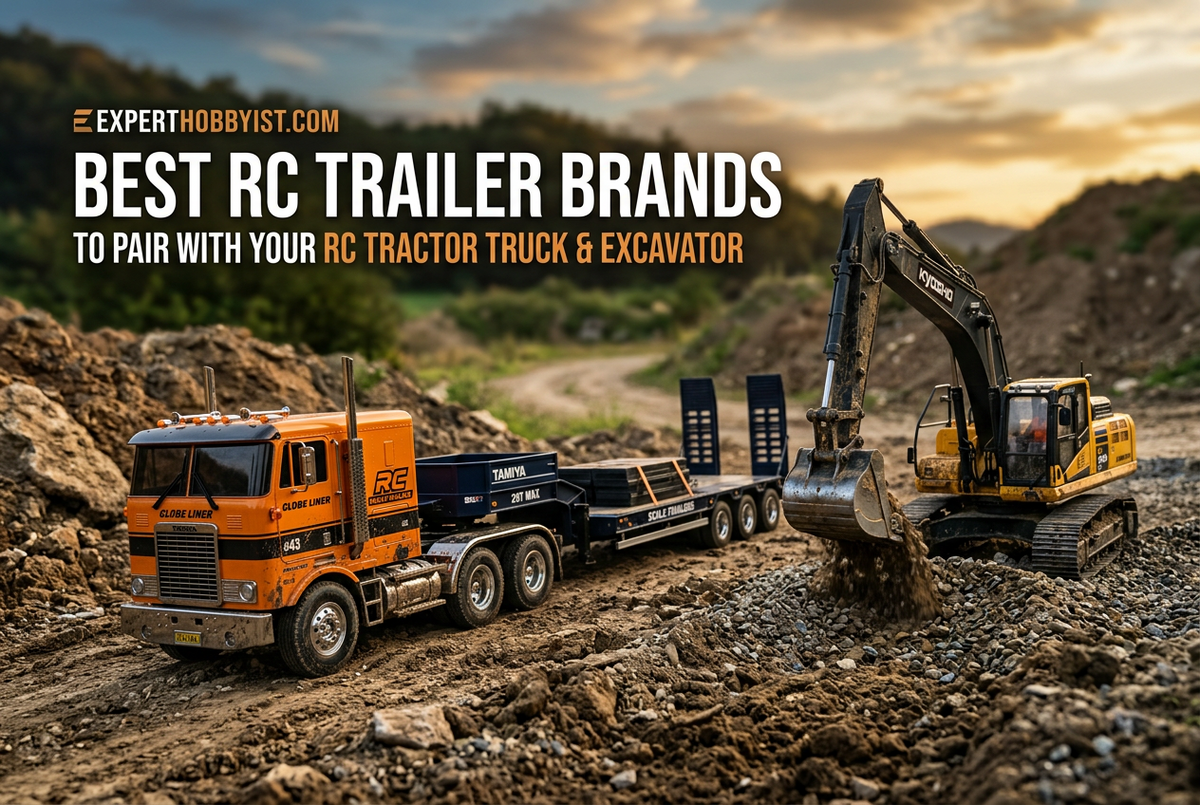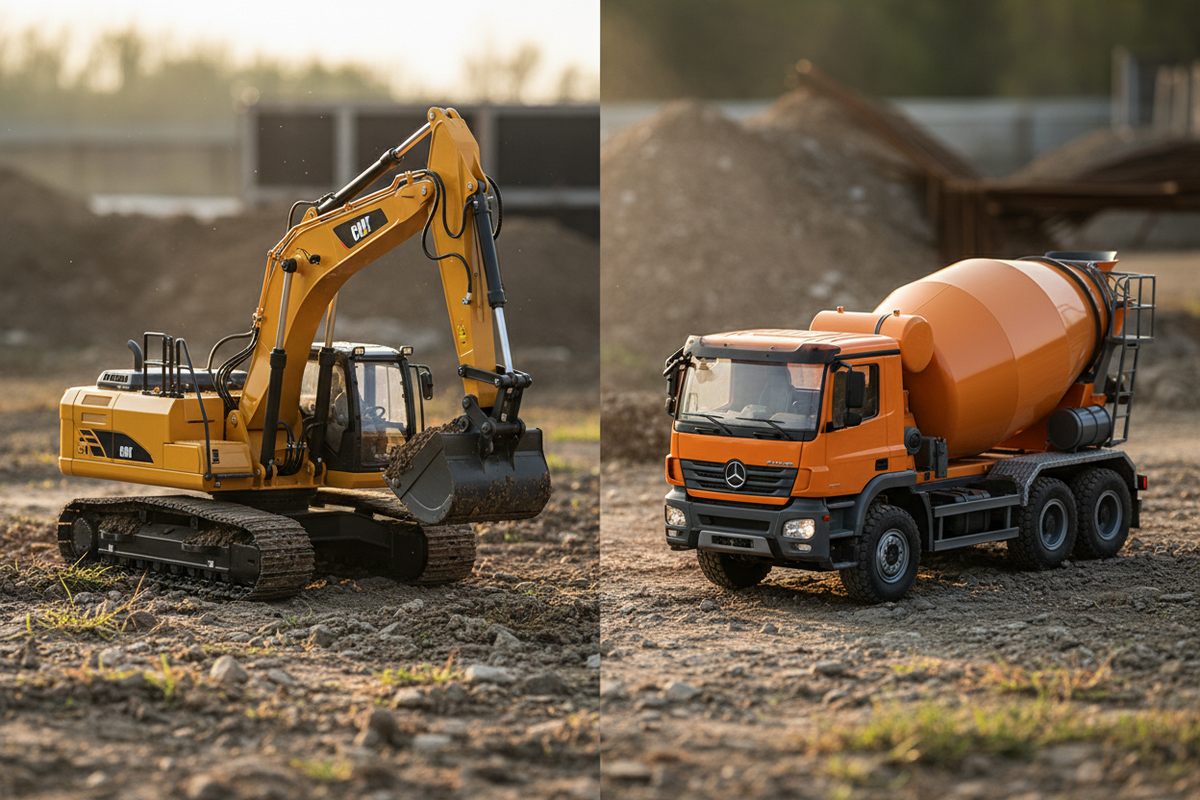

It is easy to get tempted by ultra-low-priced generic RC excavators listed on marketplaces. These cheap plastic diggers look almost identical to premium models at first glance, packed with advertised lights, sound effects and multi-channel functions. Yet countless buyers discover a frustrating truth: most budget no-name excavators break after just a few play sessions, especially once they touch sand, gravel and uneven ground. This article breaks down the core gaps between generic plastic RC toys and Huina RC excavators, explaining material choices, internal engineering, spare parts support and real-world lifespan so you can avoid throwing money away on disposable toys.
Material Quality: Thin Brittle Plastic vs Reinforced Alloy-Nylon Mix
The biggest root cause of early failure for cheap generic RC excavators lies in raw materials. Most off-brand models use low-grade recycled brittle plastic with minimal wall thickness. Boom arms, bucket linkages, gear housings and track connectors are molded quickly to cut manufacturing cost. Under even light digging load, stress points crack easily. A small bump, digging a handful of gravel, or overloading the bucket can snap the arm pivot or strip internal plastic gear teeth. Their thin plastic tracks also tear or pop off frequently during outdoor play. Many of these budget toys are only designed for smooth indoor floors, not the rough mini construction site hobbyists expect.
Huina takes a balanced, practical material strategy. Its popular mid-tier excavators such as the 1580 and 1592 combine high-impact reinforced nylon and alloy metal on all high-stress components. Main booms, dipper arms, buckets, drive gears and turret rotation rings are metal or metal-reinforced, while non-load-bearing cosmetic panels use quality ABS plastic. The tracks are made of thick flexible rubber or heavy-duty plastic links engineered to resist abrasion in sand and dirt. Huina does not over-engineer every single cosmetic piece, but all moving load-bearing parts are built to survive repeated digging, rotation and towing without instant cracking. This material difference alone doubles or triples usable lifespan for outdoor sandbox play.
Internal Gears, Servos and Control Design
Generic cheap RC excavators almost always use cheap micro plastic gearboxes and low-torque servos. Manufacturers merge multiple independent movements into shared channels to cut down electronic cost. You cannot lift the boom and curl the bucket independently with smooth proportional control. When users push these weak servos to dig gravel, gear teeth strip rapidly. Their basic circuit boards have minimal heat protection; continuous play often burns out motors or receivers with no warning. Once the internal gearbox fails, the whole toy becomes useless. There is no simple way to repair it.
Huina excavators use separate, rated servos and metal gearboxes matched to each movement. Every core action — boom lift, arm curl, bucket scoop, turret rotation and track drive — gets dedicated control with proper torque headroom. Premium Huina models use proportional 2.4GHz radio systems, so operators can apply gentle or heavy digging force instead of just full-on / full-off jerky motion. This smoother control reduces shock loads on gears and joints automatically. Motors include basic thermal protection, lowering the risk of burnout during extended backyard sessions. The mechanical layout is modular, meaning each assembly can be serviced individually instead of requiring full replacement.
Spare Parts & Repair Ecosystem: Disposable vs Serviceable
A less obvious but critical difference is after-sales support. Generic no-name RC excavators are built as disposable products. Manufacturers rarely stock spare parts. When the bucket pin, gear or track breaks, there are no matching replacement components. Standardized third-party RC parts almost never fit, because generic brands use custom one-off molds with non-uniform dimensions. Your only option is to discard the toy and buy another one. Over a year, repeatedly replacing broken cheap excavators often costs more than investing in one durable Huina machine.
Huina has built a global aftermarket ecosystem specifically for its construction lineup. Every wearable part — tracks, buckets, servos, gears, arm pins, lights and battery packs — is sold separately. Parts use consistent mounting standards across many models. If a track link snaps or a servo wears out, hobbyists can buy a cheap replacement and fix the excavator in minutes. Many parts are stocked in US and EU warehouses for fast shipping. This repairable design turns a Huina excavator into a long-term hobby asset, not a single-use toy. It also opens up modification paths: you can swap grapple buckets, breaker hammers or upgrade metal gearboxes later. Generic plastic models offer zero meaningful mod potential.
Realistic Play Limits and Hidden Marketing Tricks
Many budget listings inflate channel counts and functional descriptions to trick shoppers. A “9CH” generic excavator might merge lights and sound onto one shared channel, while actual digging movements are limited and jerky. They look impressive in product photos shot on clean tabletops, but fail the moment you recreate a real construction workflow: dig, rotate, load and dump.
Huina advertises channels honestly, with each independent movement properly separated. You can run complete site workflows, pair the excavator with Huina dump trucks and flatbed trailers, and play for months without structural failure. It still can break under extreme abuse — no RC machine is indestructible — but failures tend to happen slowly from normal wear rather than catastrophic snapping on the first outdoor use.
Final Verdict
Cheap generic plastic RC excavators carry a tempting low upfront price, but they are built for short display and light indoor use, not serious digging play. Brittle plastic, weak electronics and zero spare part support make them a poor long-term value. Huina sits in the sweet spot: reasonably priced, reinforced at critical stress points, fully repairable, and supported by a huge library of spare parts and attachments.
If you only want a static display piece for a child to play briefly indoors, a budget plastic model may suffice. But for sandbox digging, fleet building, repeated outdoor sessions and hobby-grade simulation, Huina delivers far better value and avoids the cycle of broken toys and repeated repurchases.